How to Dewatering Pig Manure to 60-65% for Organic Fertilizer Pre-treatment?
Јасf you are seeking efficient dewatering solutions for processing pig manure, our company offers two cost-effective solid-liquid separators. They can reduce moisture content effectively down to 60-65% level. Згора на тоа, there are flexible moisture reduction options with varying degrees of their dehydration ability. One is screw press dewatering machine, with stronger dehydration effect, making it ideal for preparing manure for most organic applications. Another is inclined dehydrator, suitable for water soaked swine feces disposal.
1
Наклонета машина за одводнување for Pig Manure Dehydration to 70% Water Content
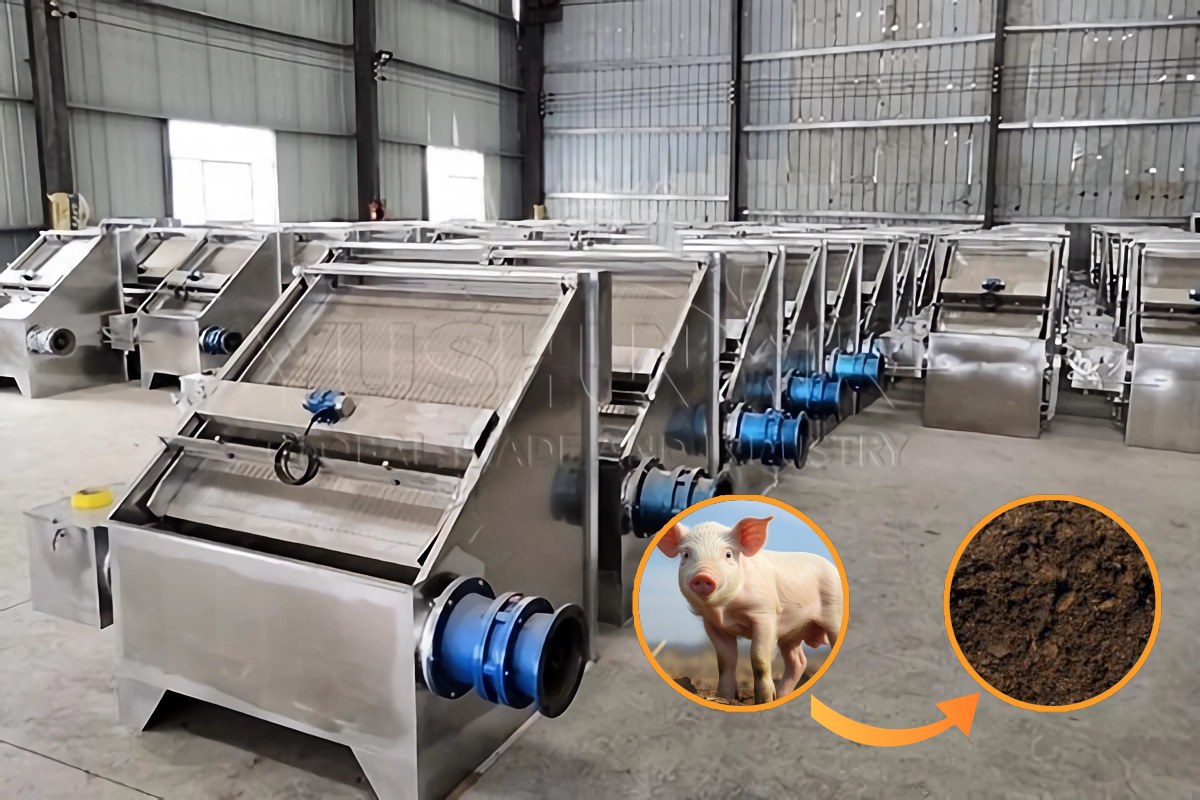
Honestly, if you want to dispose fresh pig dung with more water content of 85%. At this time, we advise you to buy our inclined dewatering machine. Indeed, the solid-liquid separation rate is up to 80%, while you can remove part of water in pig dung. Our factory have 2 models of inclined solid-liquid separator. Исто така, it can handle pig waste maximum of 40m³/h. And the discharged pig manure solids after mechanical dehydration contain at most 70% moisture. Furthermore, the screen mesh and whole shell of inclined dewatering machinery adopt 304 stainless steel, and the components all apply precisely nickel alloy. Therefore, it has high corrosion resistance so than you don’t have to worry damaging this machine by dehydrating high humidity pig manure.
2
Машина за одводнување со завртки for Pig Manure Dehydration to 60% Water Content
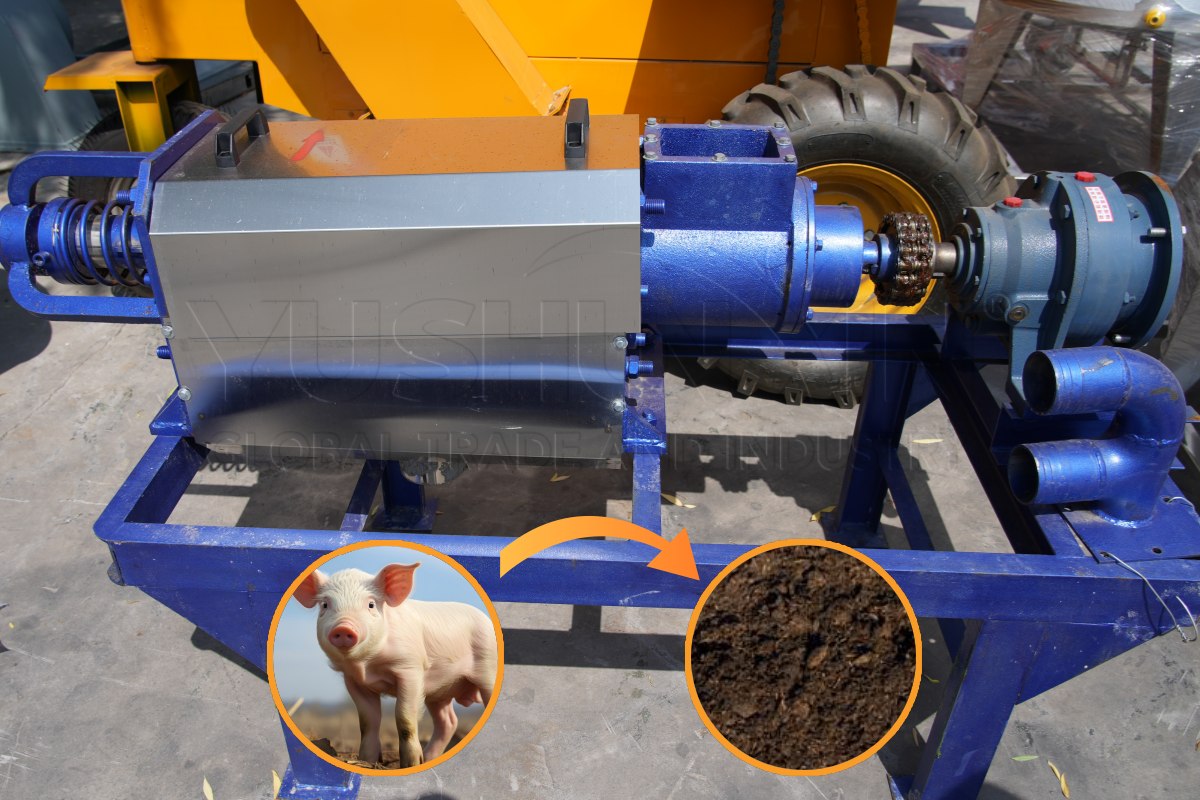
If you want to further process pig manure, you may consider purchasing a spiral extrusion dewatering machine. Згора на тоа, we have two models, both of which occupy a small area of 1-3 square meters. It can dehydrate pig dung down to 60% at a time. Our equipment can automate the processing of pig manure. First, the pump sends swine manure to the feed inlet of the dehydrator. Under the squeezing by spiral blades, the wastewater flows through pipelines. And the residue after dewatering is transported to the next step by a conveyor belt. Така, screw extrusion dehydrator can be widely of use in the dehydration operation of high humidity residue materials before drying, successfully solving the problem of dehydration of high viscosity materials in many industries.
3 Tips for Pig Manure Moisture Removal to 30-50% During Composting Process
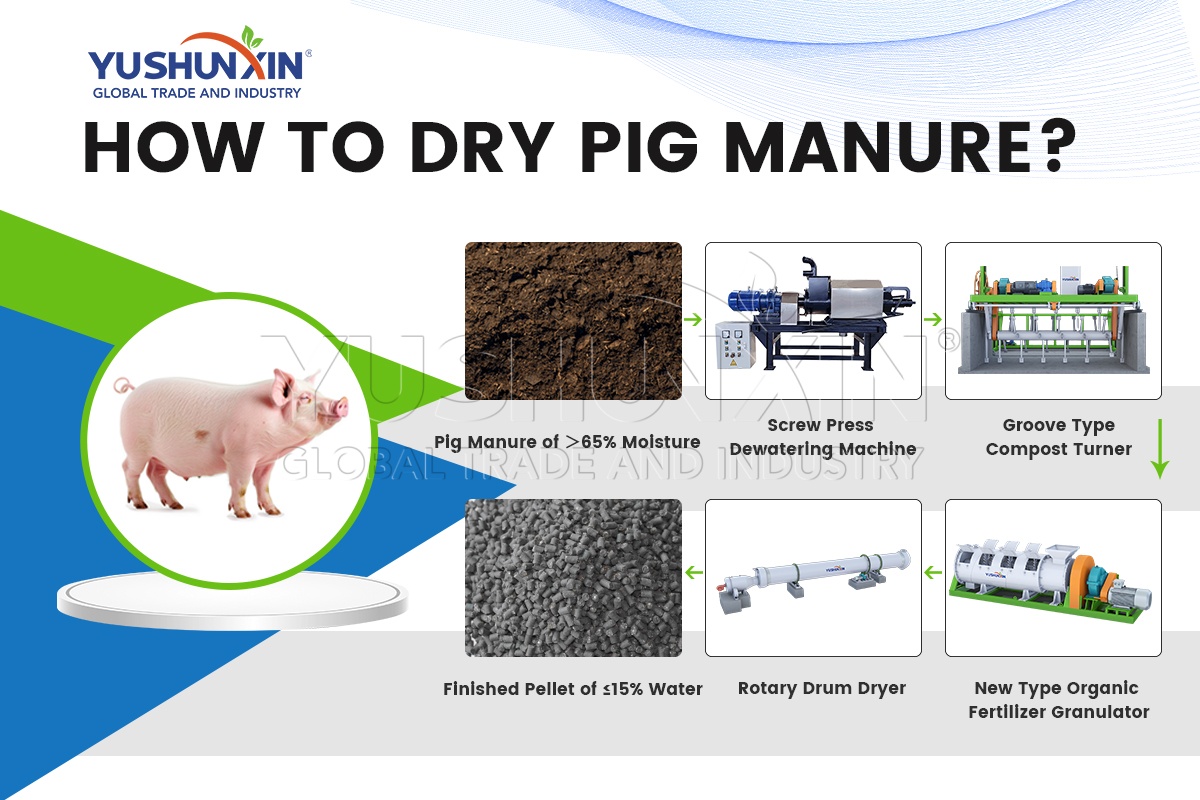
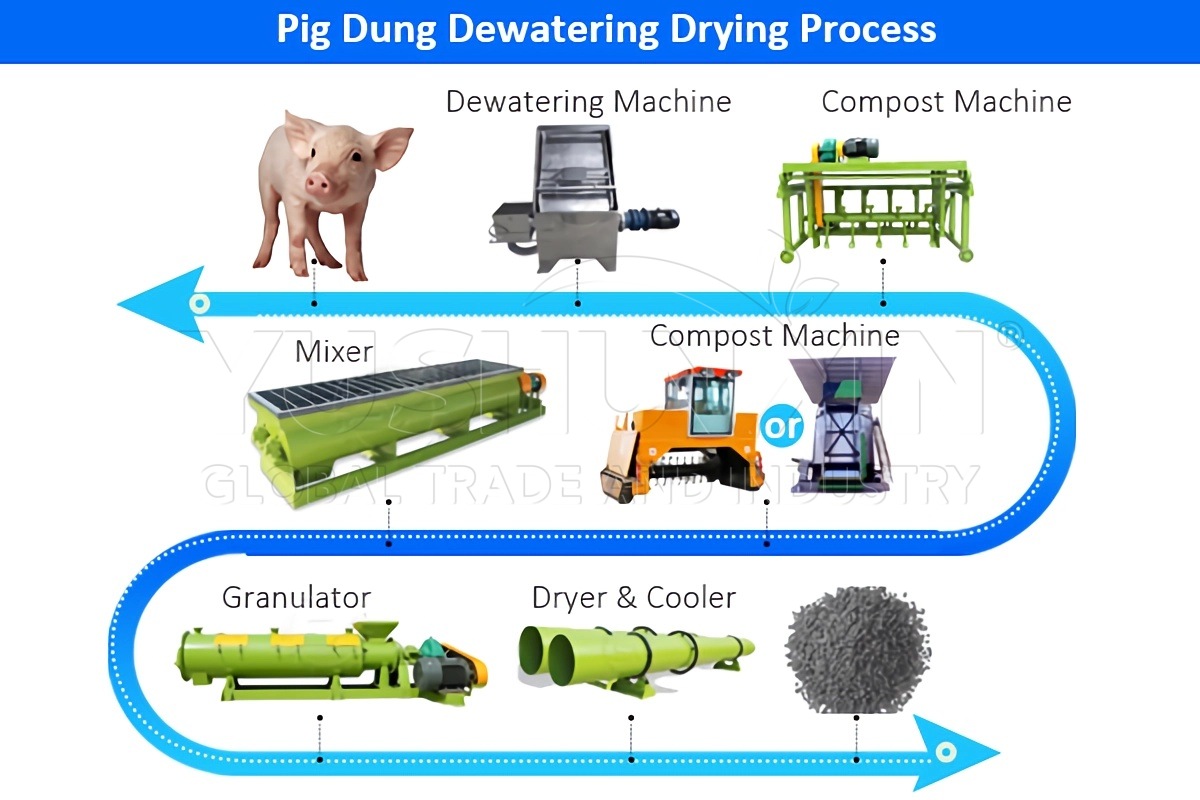
Pig manure fertilizer producers usually face relatively high moisture after mechanical dewatering, typically 40–60%. Therefore, you often choose composting and fermentation to convert pig dung into organic fertilizer. Потоа, you can lower the water content of pig excrement after composting to 30-50%, which is more suitable for organic fertilizer granulation. Here, many livestock farms aim to design an efficient pig manure fertilizer production system. Во меѓувреме, you need to consider transportation, storage, deodorization, and drying cost control. Така, moisture control during composting becomes a core technical process in pig dung fertilizer manufacturing.
1
Absorbent Materials & Turning Design During Pig Manure Composting Process
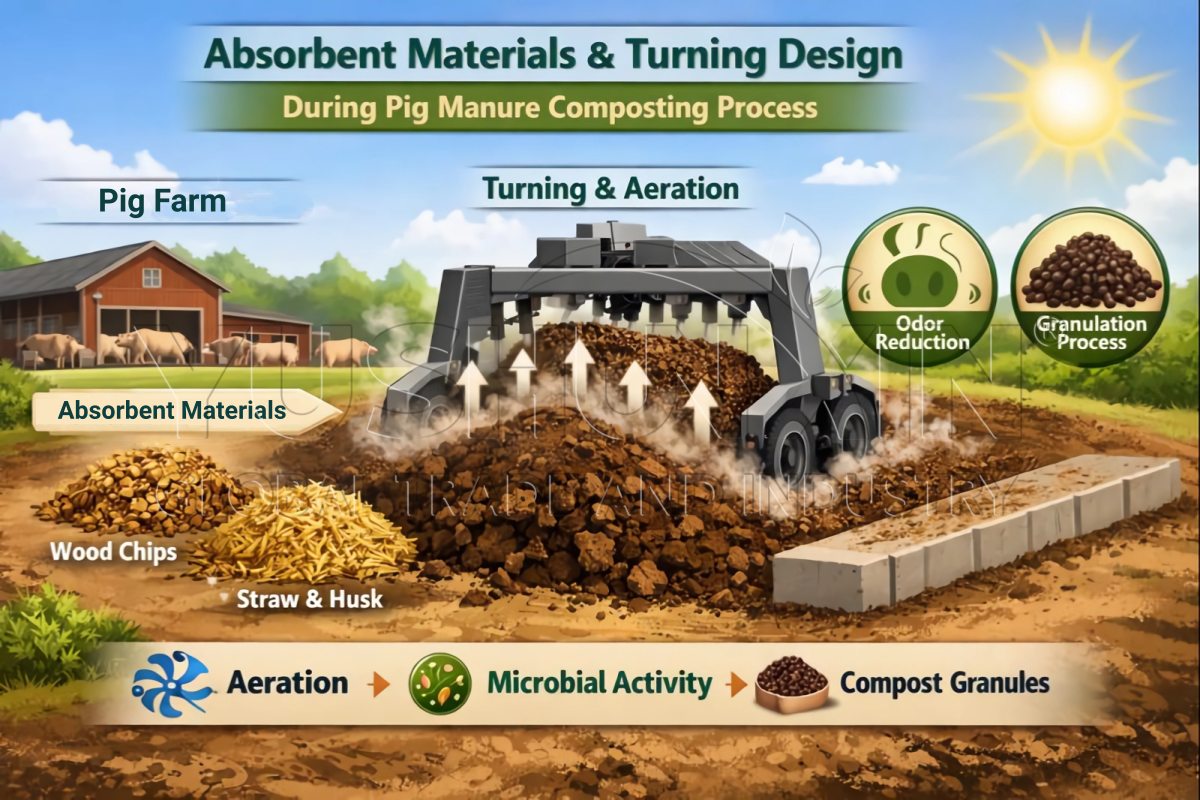
Indeed, adding absorbent auxiliary materials help pig feces composting reduce water content during fermentation. For example, wood chips, husk or straw absorb moisture and stabilize pig manure compost piles. In practical composting, a common approach is mixing “wood chips + straw” или “rice husks + wood chips“. Покрај тоа, the ratio is based on the moisture content of the raw pig manure, with the initial moisture content ideally between 60-65% when composting with additives. Исто така, it is important to turn pig manure regularly for aeration and microbial activities. This turning design promotes moisture evaporation and heat exchange during pig dung composting production. Consequently, this fermentation system minimizes odor and supports later granulation.
2
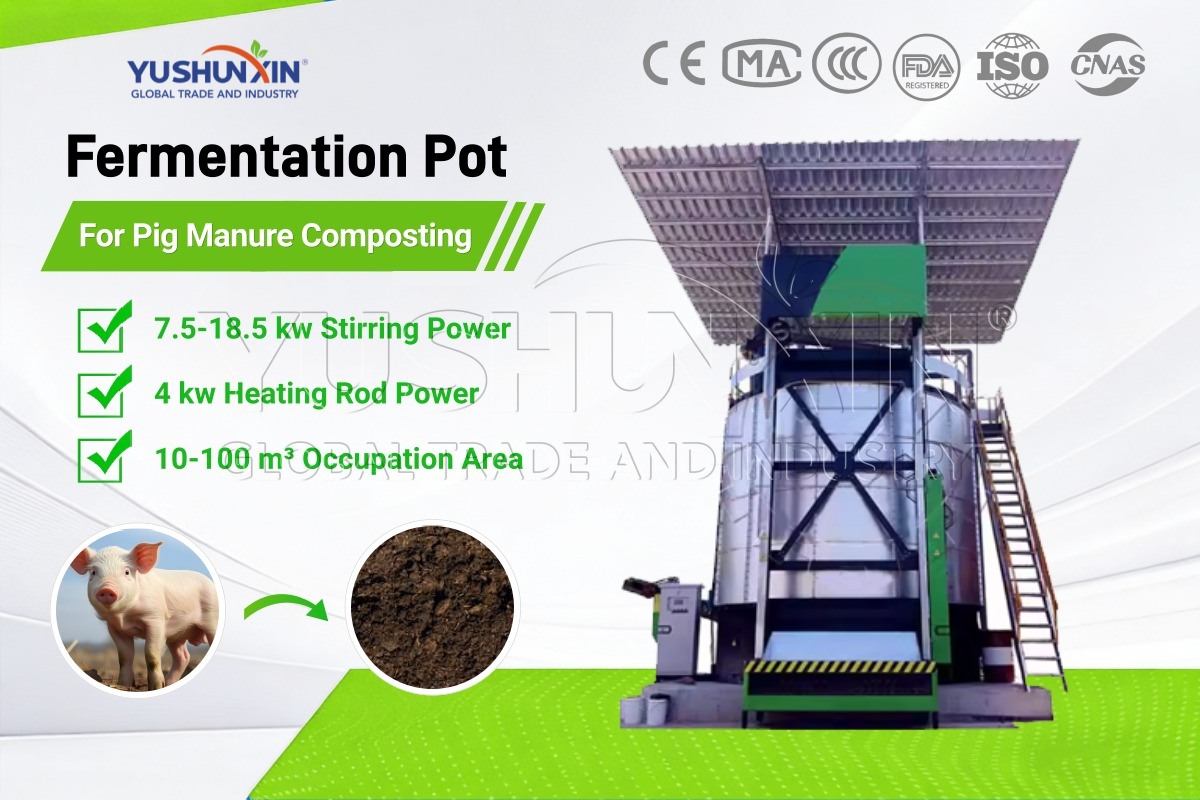
Secondary Fermentation Technology in Pig Manure Fermentation Pot
Indeed, adding absorbent auxiliary materials help pig feces composting reduce water content during fermentation. For example, wood chips, husk or straw absorb moisture and stabilize pig manure compost piles. Исто така, it is important to turn pig manure regularly for aeration and microbial activities. This turning design promotes moisture evaporation and heat exchange during pig dung composting production. Consequently, this fermentation system minimizes odor and supports later granulation.
3
Composting Equipment Design for Pig Manure Moisture Reduction System
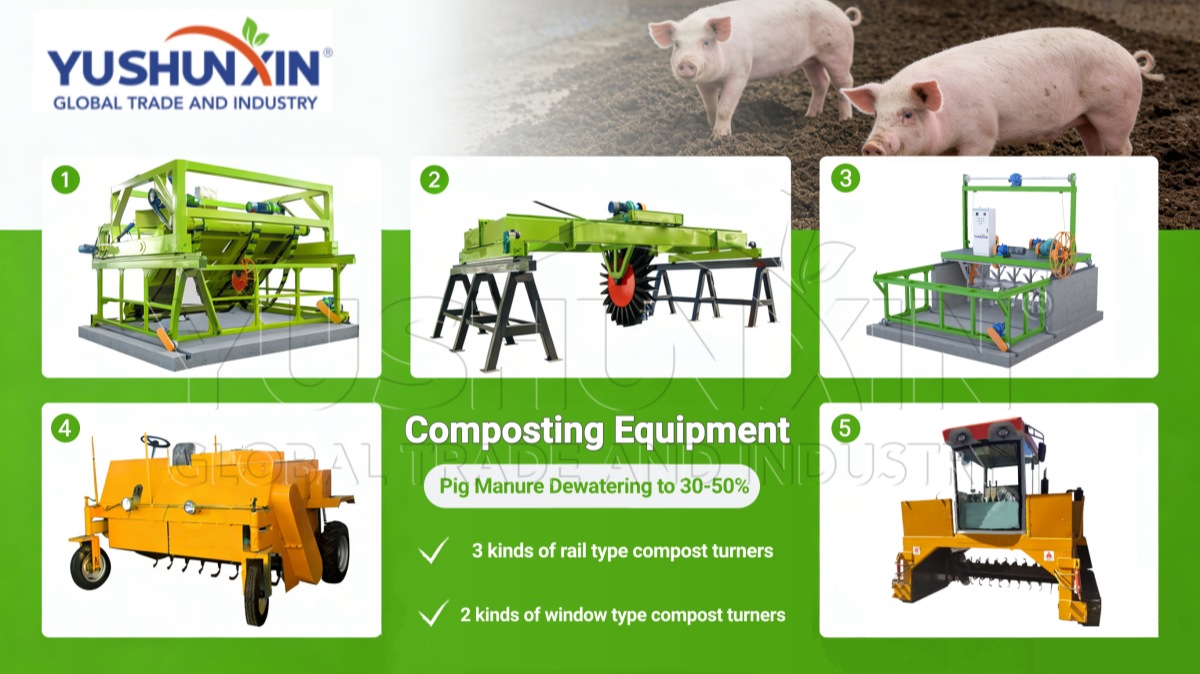
Processing pig manure with composting equipment is also an effective method for moisture reduction. Our company provides 3 kinds of rail type compost turners and 2 kinds of window type compost turners for pig manure composting. This composting process shortens dewatering time while ensuring uniform fermentation. Како резултат на тоа, your pig manure fertilizer production line runs efficiently and increases production capacity after moisture reaches 30-50%.
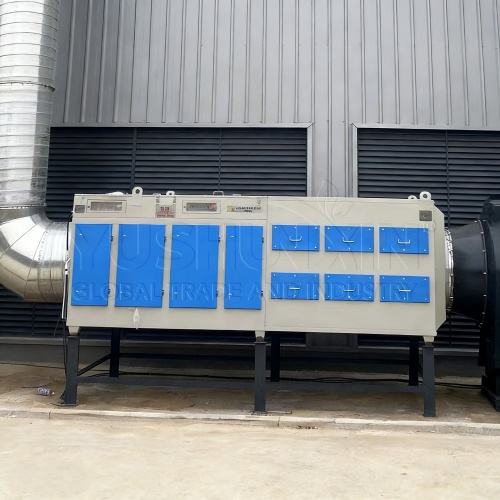
TOP 3 Pig Manure Moisture Removal Methods During Granulation Process
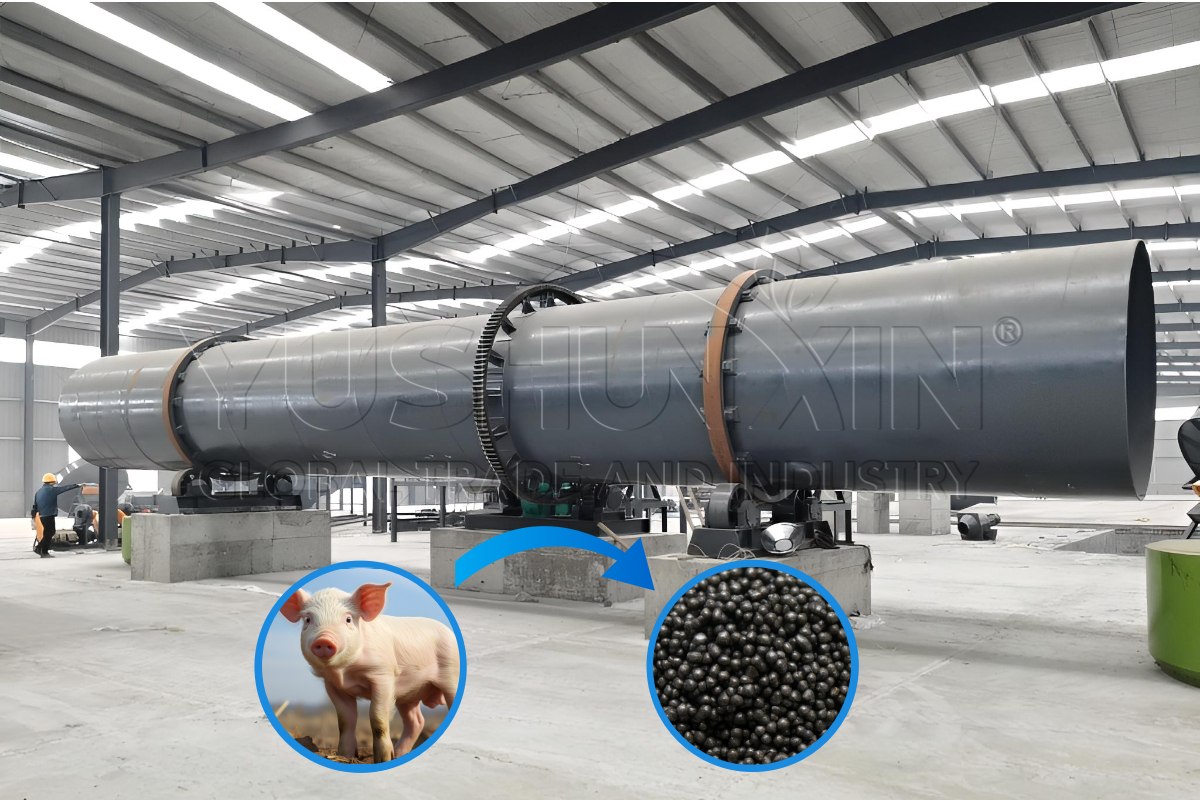
Аctually, pig dung moisture usually reaches 20-40% after fermentation. Nevertheless, organic fertilizer producers still face moisture control pressure during pig dung pellet making procedures. So, most of the cases we recommend to use our фен со ротирачки барабан for drying. After the drying, cooling or coating processes, the moisture content of the pig manure particles reaches the marketing standard, less than 10%.
1
Mixing Auxiliary Substances
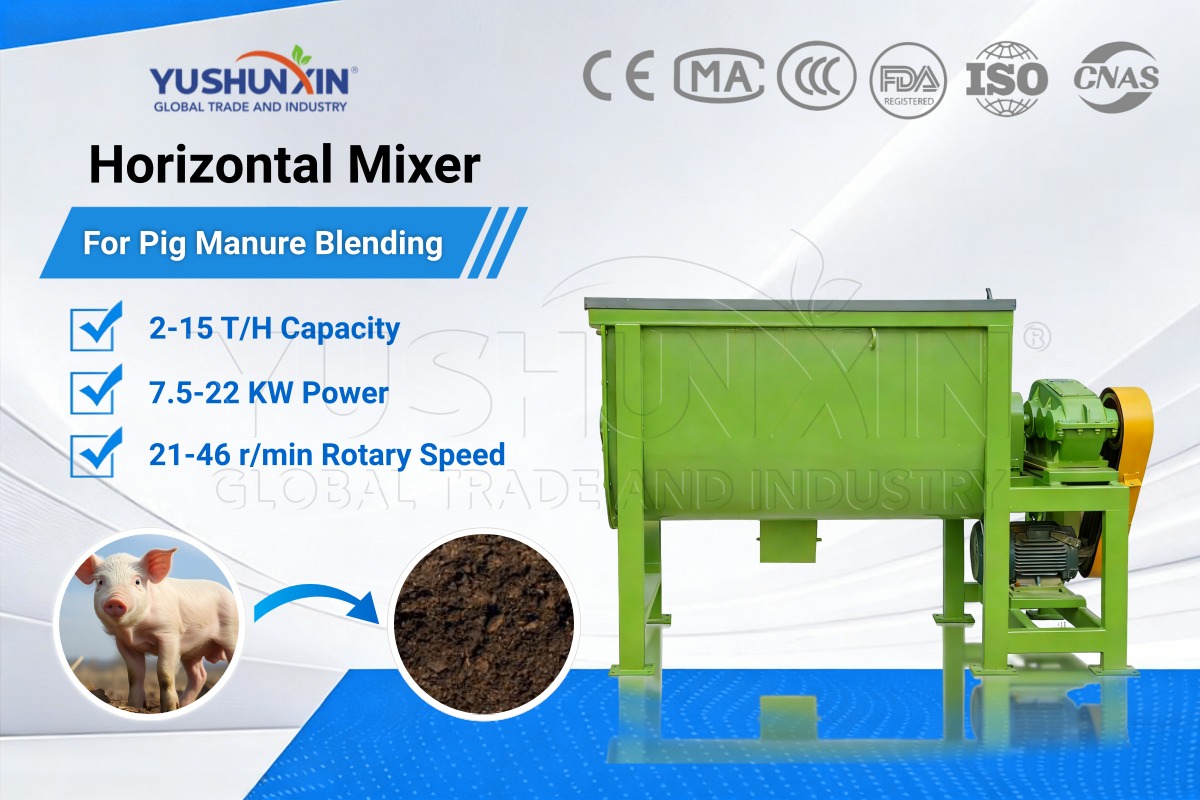
After dewatering and composting, if you want to further reduce the pig dung’s moisture content to below 30%, you can do the following during the mixing stage. Firstly, our plant recommends increasing the blending frequency and time to promote moisture evaporation. Secondly, you can also blend dry powder materials to absorb excess water from pig dung compost. For example, you can mix pig manure with nitrogen, phosphorus, and potassium powders to adjust moisture and nutrient balance. Most importantly, our horizontal mixer’s rotating blades breaks up the pig manure compost pile, forming thin layers of 20-30 mm thickness for faster air contact. Our company offers multiple mixer models for different pig dung production scales. For instance, the SXWJ-1630 has an output of 10-15 t/h, a rotating speed of 21 r/min, and a power of 22 kW.
2
Granulation Process
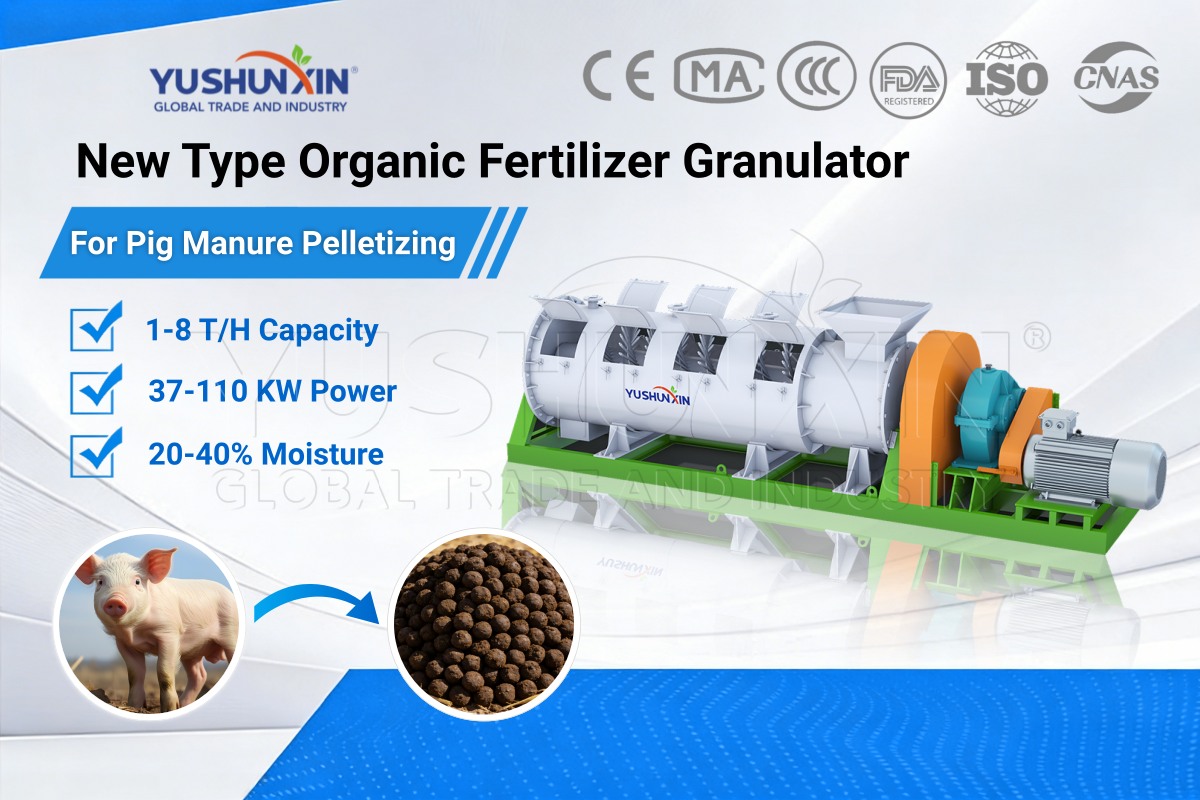
During granulation, it’s necessary to pay attention to the moisture control. Too much water causes soft pellets and uneven granule strength, while less water is hard for pellet forming. Our company supplies four types organic fertilizer granulator types for pig dung processing. Among them, the new type organic fertilizer granulator is well received by customers. Because this pelletizer uses high-speed mechanical stirring to make pig manure powder continuous mixing and ball making. Така, its granulating procedure increases pellet roundness and particle appearance. Згора на тоа, we offers 5 models with capacities of 1-8 t/h for different scales of pig manure fertilizer production. Due to wet granulation technique, this stage will increase the moisture content of the pig manure pellets.
3
Сушење & Post‑Treatment
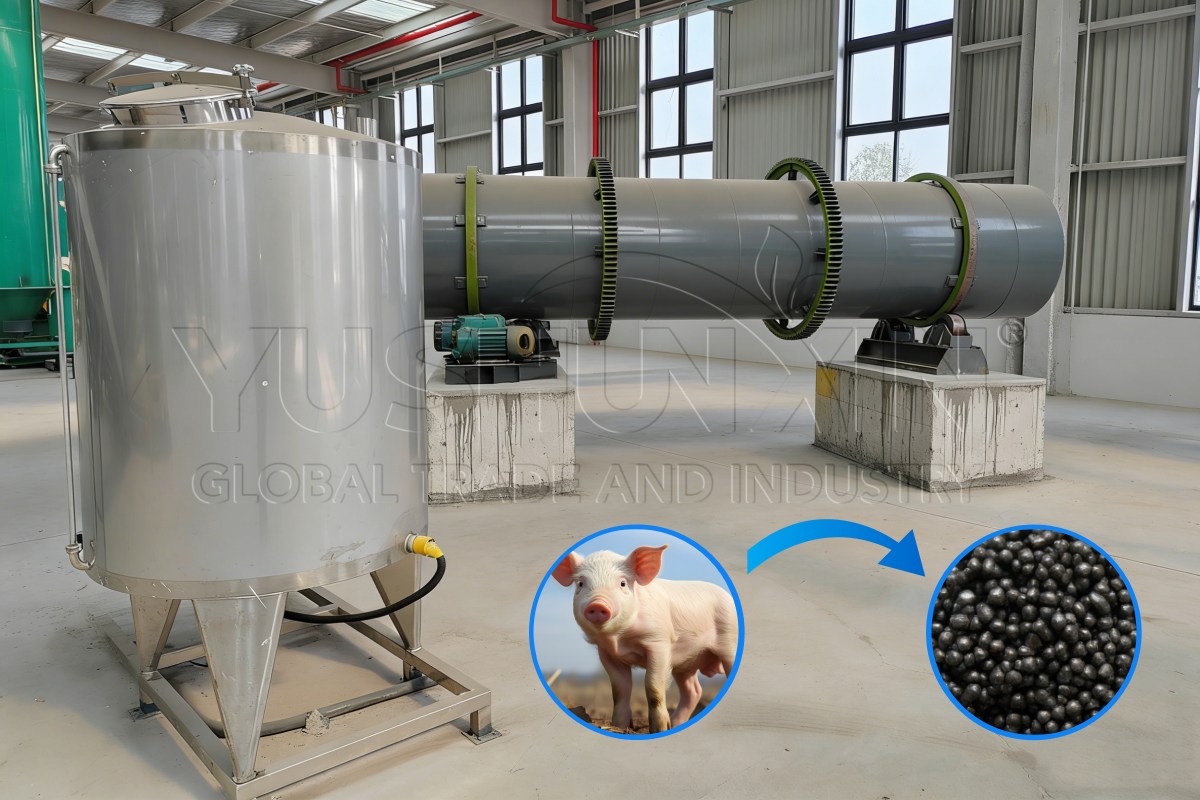
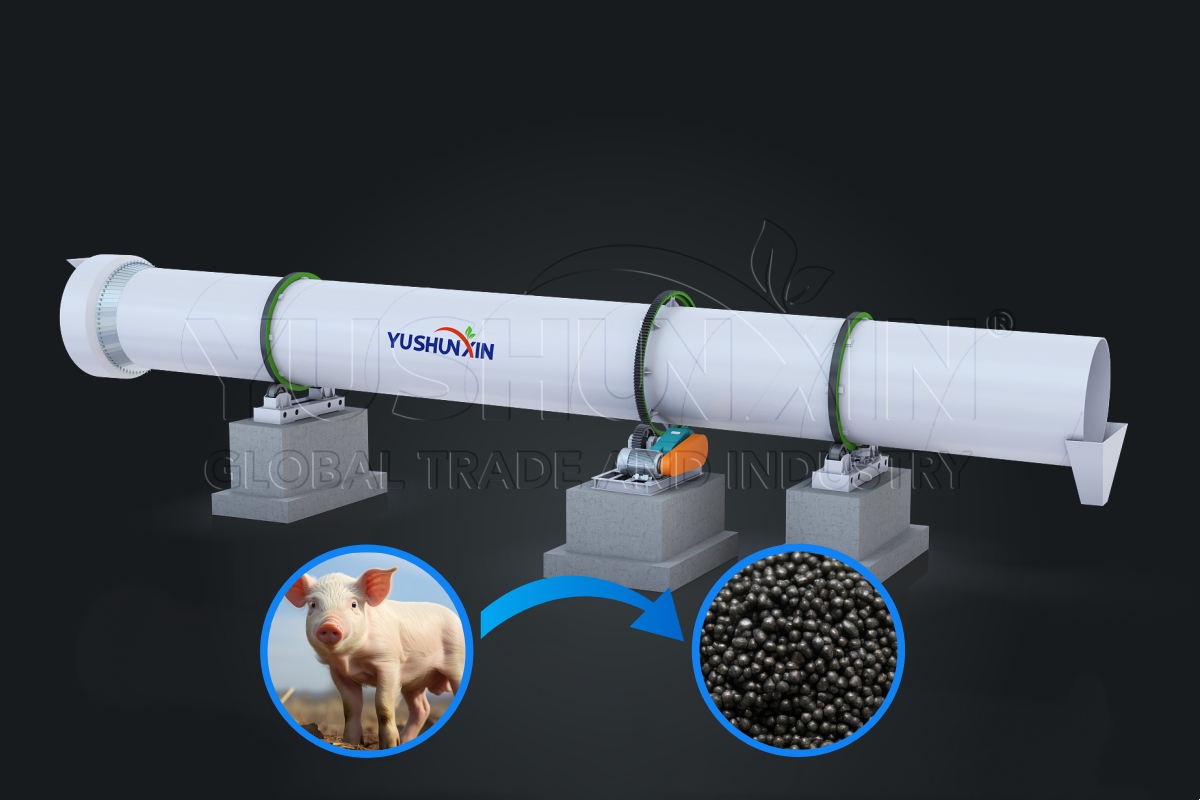
After granulation, you can use our organic fertilizer dryer for precise drying and moisture reduction to meet standard requirements. This drying equipment maintains temperature and airflow balance to ensure uniform heat exchange with pig manure pellets. Во меѓувреме, adjusting the rotation speed and inclination angle to form an even material curtain within the drum, improving drying uniformity. After drying, pig manure fertilizer granules reach a moisture content of around 10-14%. Потоа, the cooler uses relatively dry inlet air. In some cases, partial use of drying exhaust air improves cooling air dryness and efficiency. Typically, our cooling process controls the temperature of the pig manure organic fertilizer particles to within 5 ℃ above ambient. Therefore, it can prevent pig manure pellet surface condensation and secondary moisture absorption. Furthermore, you can choose a coating tank for uniform spraying hydrophobic oil or wax coatings. Or you can select the coating drum machine thoroughly to mix moisture-resistant materials, such as talc or bentonite. Finally, this coating process reduces pig dung pellet moisture absorption, dusting, and caking during storage. And adding the amount of coating materials on the order of 0.2-1.0% of the organic fertilizer particle mass is enough.